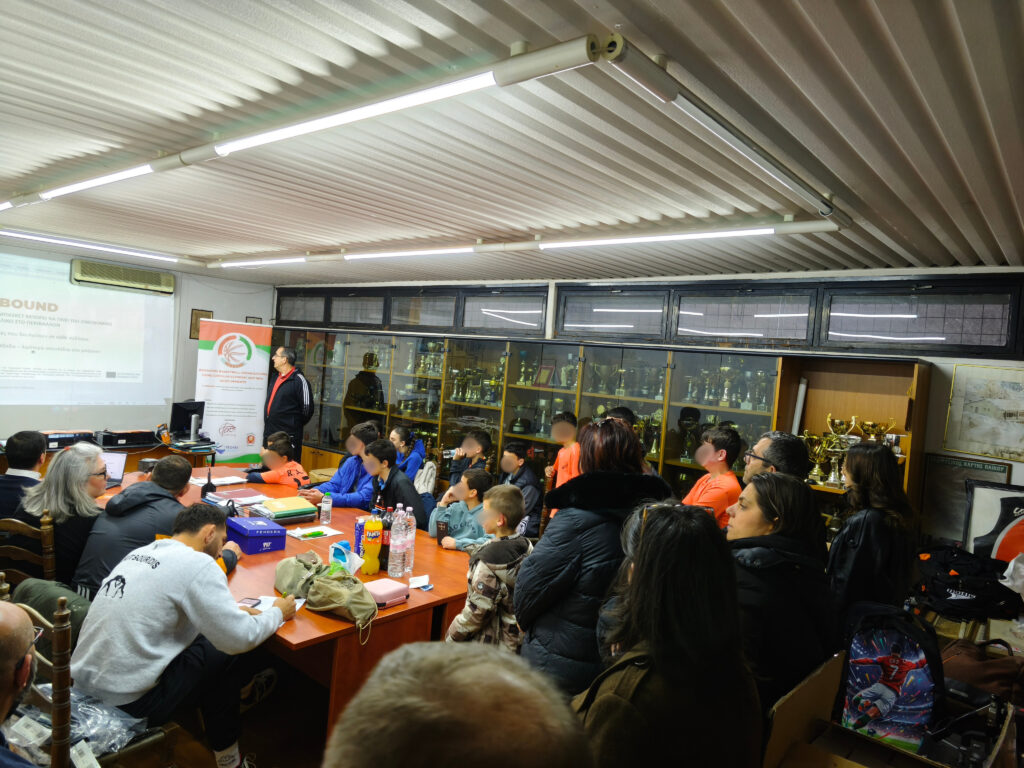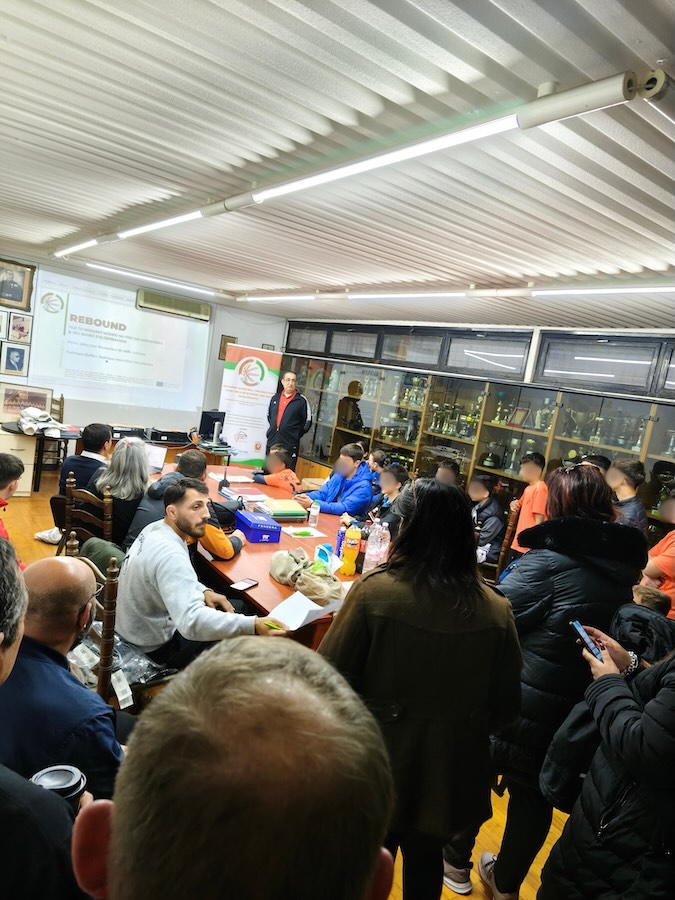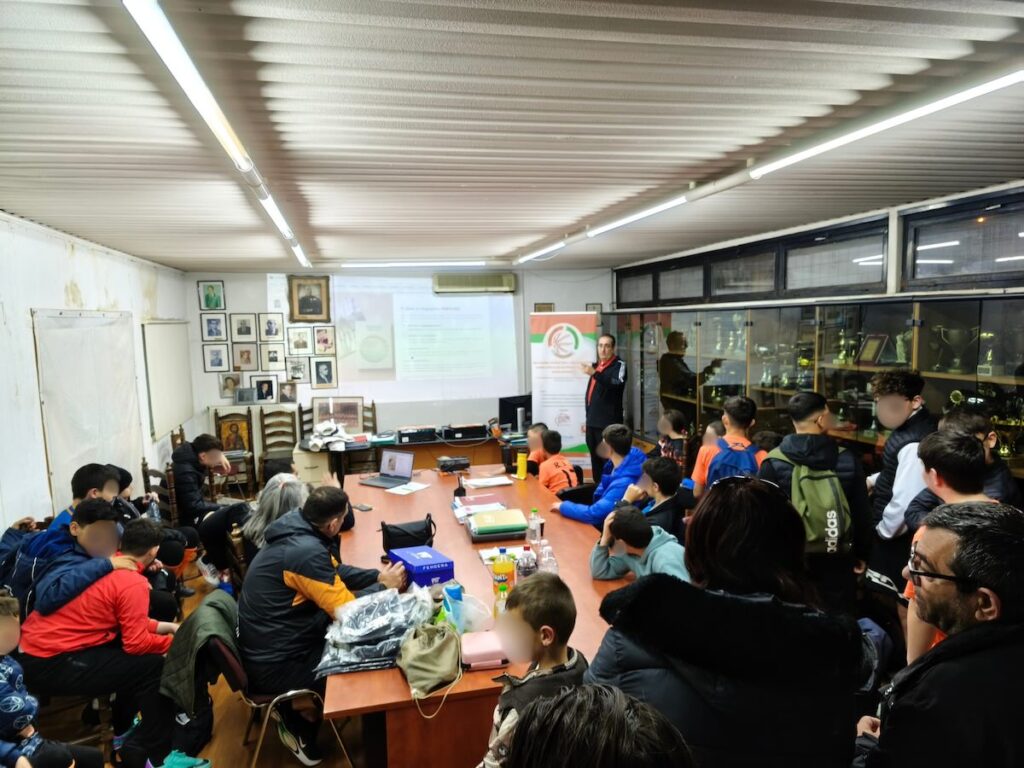
The REBOUND seminar took place on 20 March 2026 in Thessaloniki, Greece, and was implemented by the project coordinator, Tero PC, within the framework of the project’s activities. The session brought together club members and young basketball players around a key idea: how sport can become more sustainable through the circular economy. The seminar was conducted onsite, fostering interaction, active participation, and the exchange of ideas among participants.
The main objective of the seminar was to introduce the fundamental principles of the circular economy and their application in sport, with a particular focus on basketball. At the same time, the session aimed to enhance participants’ knowledge, skills, and awareness regarding sustainable practices that can be integrated into the daily operations of sports organisations.
The seminar was structured in three parts:
Introduction to Circular Economy in Sport
Participants were introduced to key concepts such as waste reduction, resource reuse, and more sustainable operational models. The session highlighted how these principles can be applied in the context of sports clubs and everyday basketball activities.
Practical Applications and Examples
Particular emphasis was placed on real-life examples related to the organisation of sports activities and events. Participants explored practical ways to adopt greener practices, including sustainable event organisation and simple everyday actions that can help reduce environmental impact.
Interactive Discussion and Exchange
Through discussion and the exchange of experiences, participants were encouraged to reflect on their own practices and identify practical solutions that can be applied within their sports environments. The interactive nature of the session supported active engagement and collaborative learning.
The seminar contributed to strengthening the understanding of circular economy principles in sport and promoting more sustainable behaviours among participants. It also highlighted that even small changes in daily sports activities can lead to significant environmental and social benefits, while reinforcing the role of athletes and club members as agents of change within their communities.