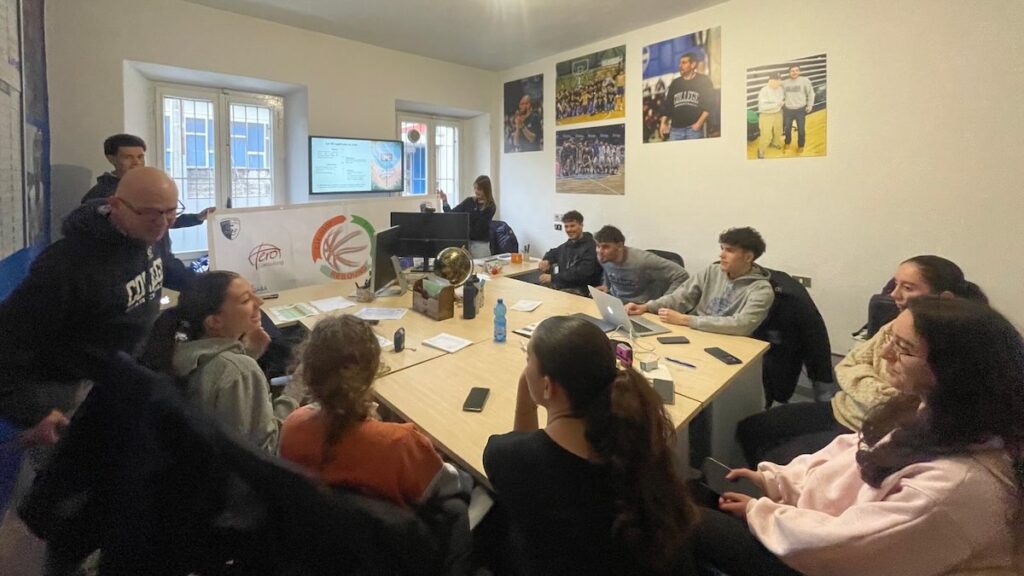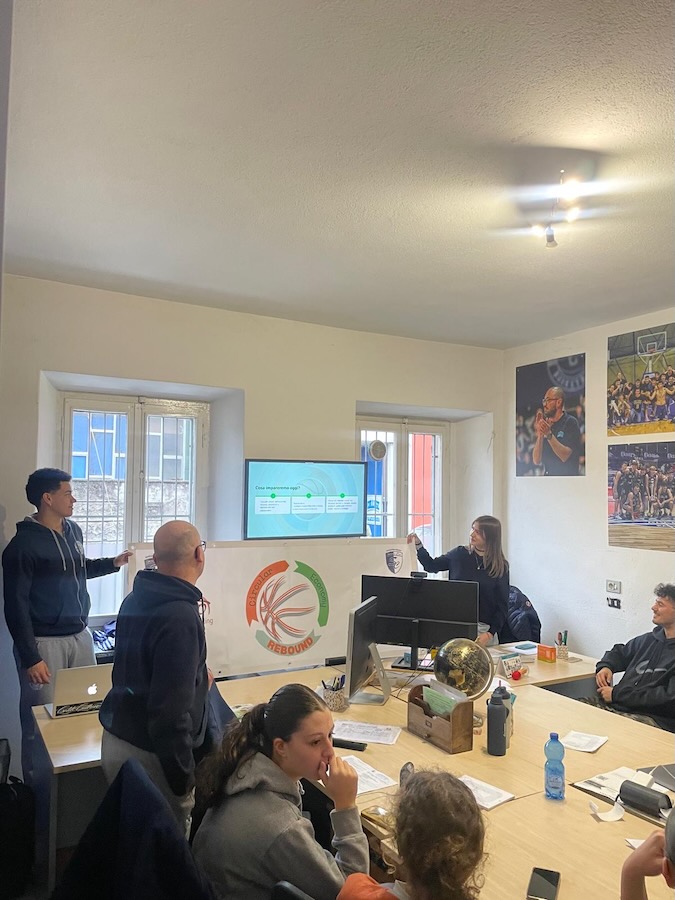
The second REBOUND seminar took place on 14 February 2026 at the headquarters of ASD Sporting Borgomanero as part of the project’s WP3 – D3.1 implementation activities. Following the first seminar, which focused on the theoretical framework of circular economy in sports, this session marked the transition to the practical implementation phase. The seminar was conducted fully onsite to enhance operational planning, foster direct collaboration, and facilitate hands-on group work among participating clubs. The session was led by Paolo Pastorei.
The main objectives of the seminar were to transform theoretical circular economy concepts into concrete actions at the club level, identify short-term “quick wins” for immediate implementation, and define operational roles and responsibilities within each participating organization.
The seminar was structured in three parts:
- Review of Key Concepts
Participants briefly revisited concepts introduced in the first seminar, including the EU waste hierarchy (prevention, reuse, repair, recycle), the 4R model applied to basketball clubs, and best practices presented in the REBOUND Manual. Participants reflected on potential challenges and opportunities within their own clubs. - Selection of Pilot Actions (“Quick Wins”)
Through guided group discussions, participants identified priority actions that are low-cost, high-impact, and feasible in their local context. Selected actions included promoting reusable water bottles, managing sports uniforms and footwear for second-life use, introducing reusable cups during club events, and transitioning gradually toward digital match reports. For each action, participants defined operational responsibilities, implementation timelines, required resources, and internal communication strategies. - Collaborative Planning and Next Steps
The hands-on exercises enabled participants to collaborate on practical planning, define responsibilities, and outline next steps to ensure the successful implementation of the selected actions.
The seminar successfully marked the shift from theoretical awareness to structured, actionable implementation. Clubs strengthened their understanding of circular economy practices and reinforced their commitment to sustainability in sport, creating a foundation for tangible changes in their day-to-day operations.